Stray Children launched on the Japanese eShop on 26th December 2024. We weren’t able to review it back in October when it arrived in the West, but we’ve now managed to catch up with Onion Games’ latest…
Your dad’s missing and some weird “uncle” is at the door, claiming to know you. Stray Children just chucks you straight into things with barely a title screen – but perhaps that sort of stylistic confidence is unsurprising coming from people behind Moon: Remix RPG Adventure. Yoshihiro Kimura and Onion Games have delivered a compact, auteur-driven project, heading off on adventures into emotional storytelling rather than into sophisticated mechanics. And it uncovers some impressive treasures on its quest.
The story we’re told is that of a dog-faced kid venturing into a fantasy world through the screen of a video game. That world is surreal, funny, and sometimes very dark. In contrast to this unsettling tone, the graphics present charming, cute pixels, with a colour palette stirring memories of the Game Boy Advance. That soft presentation is the lens to show rather strange and uncomfortable things: Lord of the Flies orphans in a prison, for example, or a stalking frog paparazzo.
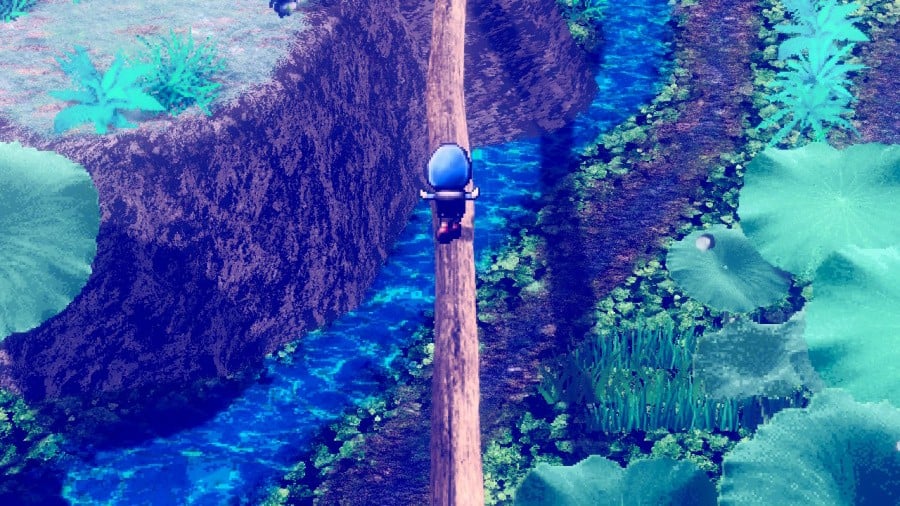
The game takes its unexplained opening and runs with it, shunning straightforward exposition and trading instead on feelings and vague impressions. Nonetheless, the gist of it is that you are trapped in a trippy, sinister world populated by children who are abandoned and lost.
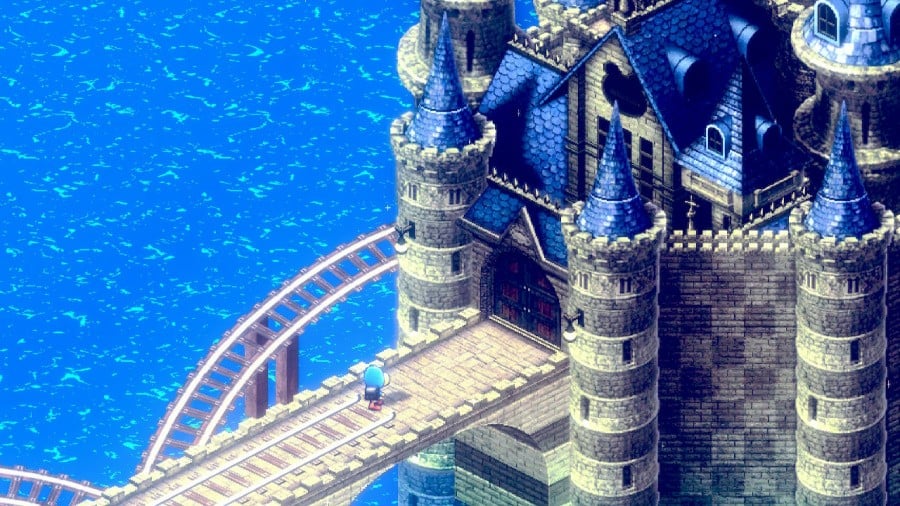
It is the world of a video game, and its heroic knight has been destroyed – your task is to put it back together. The children, meanwhile, are lacking clear figures of authority, yet subject to judgement, labelled “bad” and punished. You explore from a top-down perspective in the 16-bit style, talking to myriad inhabitants of this endlessly off-kilter world.
The themes of parental authority and a child’s perspective are taken further by the enemies in the lands you explore. You will face random encounters with the “Olders” – creatures based on adults, themselves failing to cope with hang-ups and demons. They inflict suffering and strict expectations while wrestling their own internal frustrations.
In practice, this is represented by bullet-hell-style attacks dealt out in a turn-based structure. Kimura was reportedly inspired by Undertale, which is no bad thing. The Olders can be defeated by attacking on your turn, which requires you to stop a spinning arrow on a segment of a circle. The size of the segment, its position, and the number of rotations you’re allowed before you have to press all get changed up. However, it’s not exactly the deepest mechanic – that’s just not what the game’s going for.
Instead of fighting, the Olders can instead be talked down from their fixations and freed, excluding them from further random encounters. This talking mechanic is a continuation of the inscrutable approach Onion Games has taken to the game. Various speech options need to be selected in the right order during combat, taking one turn per option, and resetting when mistakes are made.
Finding out the right order for your statements, however, is mysterious in the extreme. It’s very easy to miss out completely on freeing the Olders, and even the ones you get will still require some guesswork. Later, tougher bosses make trial and error pretty severe, too.
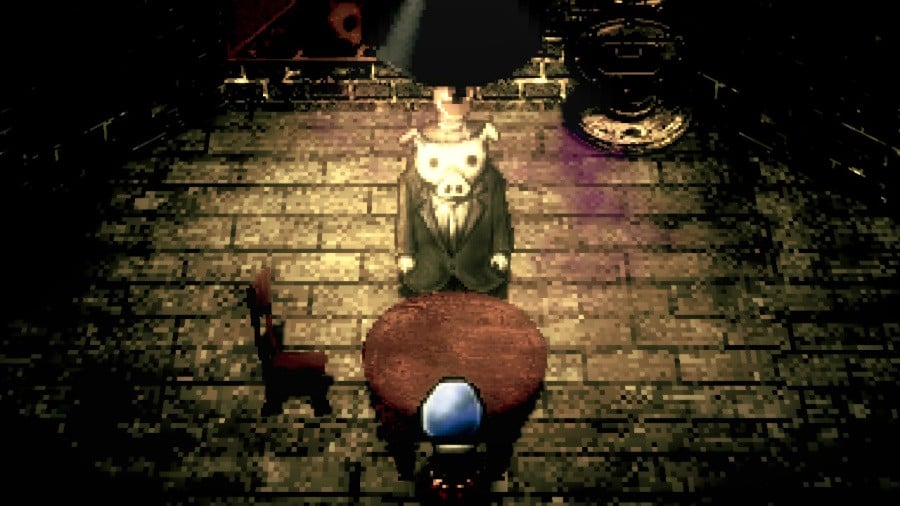
That experience of talking to the Olders is emblematic of the game’s general attitude to you as you play. There is plenty of friction here, but it’s so consistent from minute one that it’s clearly intentional. Experiencing the world as something confusing and unexplained — inexplicable perhaps — is alienating but childlike. This hammers home what the game’s about, but it doesn’t always feel good to engage with. There’s a tension between delivering on the theme and being fun to play, but that just makes the game interesting.
One thing that consistently delights, however, is the sound. The music sits perfectly with the game’s surreal world and its colours, which seem at once washed out and oversaturated. Eerie woodwinds, for example, make the perfect theme tune for tailing pigs along a train track, something like 2000s J-pop accompanies a lily pad gliding minigame, and a trilling harpsichord leads you around a grand palace.
The stand-out feature of the sound effects, meanwhile, has to be the character voices. These sit somewhere between the apparent sentences of Simlish and the one-dimensional jibber-jabber of Animal Crossing. They are clearly somehow composed from different languages, with some distinctly German snowmen being particularly memorable.
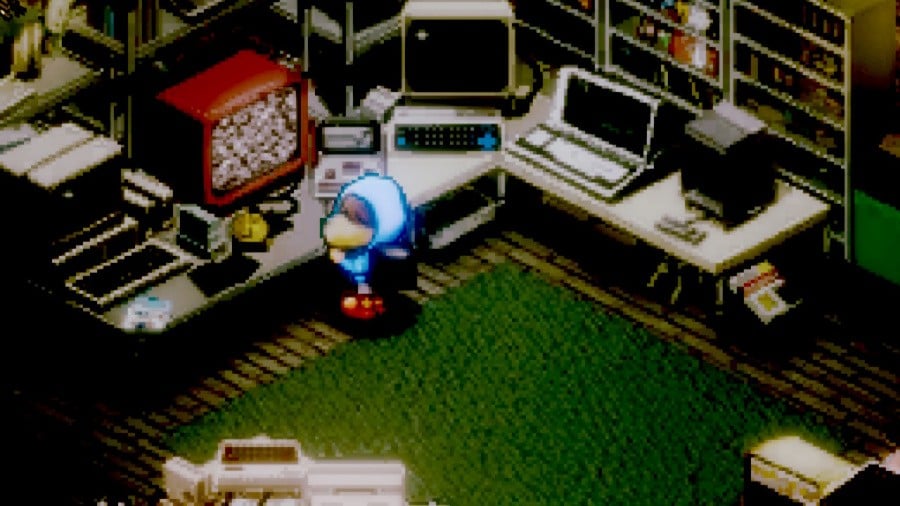
Despite some frustrating repetition (unskippable dialogue right between a save point and a boss fight? Check!), Stray Children is not overlong, clocking in at about 12-15 hours. A lot of my time was spent wandering, searching for hidden items in every nook and cranny, and talking to every character I saw – sometimes a requirement for progression.
Again, though, the game gets away with the friction: the disorientation and lack of comfort create a sense of vulnerability – of being a stray. No doubt some players will find this opacity all a bit much. But for those feeling patient and intrigued by the art style and storytelling, it’s a joyful thing to play overall.
While I was in the latter camp — loving the surreal world despite the challenges — I was definitely grateful for the pick-up-and-play nature of the Switch. The pixel art looks great on the small screen, too. The hybrid console is still the best way to play the right kind of games, and this is one of them.
Conclusion
Stray Children is nothing if not opinionated. From its abrupt opening to its inscrutable mechanics, it outright refuses to hold your hand. This clarity of purpose builds a world that is totally captivating – if it gets its hooks into you.
If you don’t have the time and patience to explore and experiment while being labelled a “bad child”, this may not be for you. However, if you’re game for some surreal challenges, this is a memorable and ultimately optimistic adventure.